
Do post-spawning sea trout survive catch and release?
This is a question many anglers ask — and the answer is not simple.
Catch and release has become a natural part of modern fishing.
But when it comes to post-spawning sea trout — kelts — the question arises:
Do they survive being released?
The answer is not straightforward.
However, we know enough to make better decisions by the river. And ultimately, it also comes down to what our conscience tells us to do, especially considering the changes taking place in nature today. I will support my answer with two sources and also include my own experience.
What do studies show?
Research on sea trout and brown trout shows that survival after release is often very high.
In many cases, survival can exceed 90%, especially when the fish is caught on a fly and hooked in the mouth. Proper handling is crucial, and fish often recover well if they are not taken out of the water and are released quickly.
This all suggests that catch & release works — under the right conditions and when done properly.
Whether fly size matters is unclear — I don’t believe it plays a major role, but that is a topic for another article.
Are post-spawning fish different from fresh-run fish?
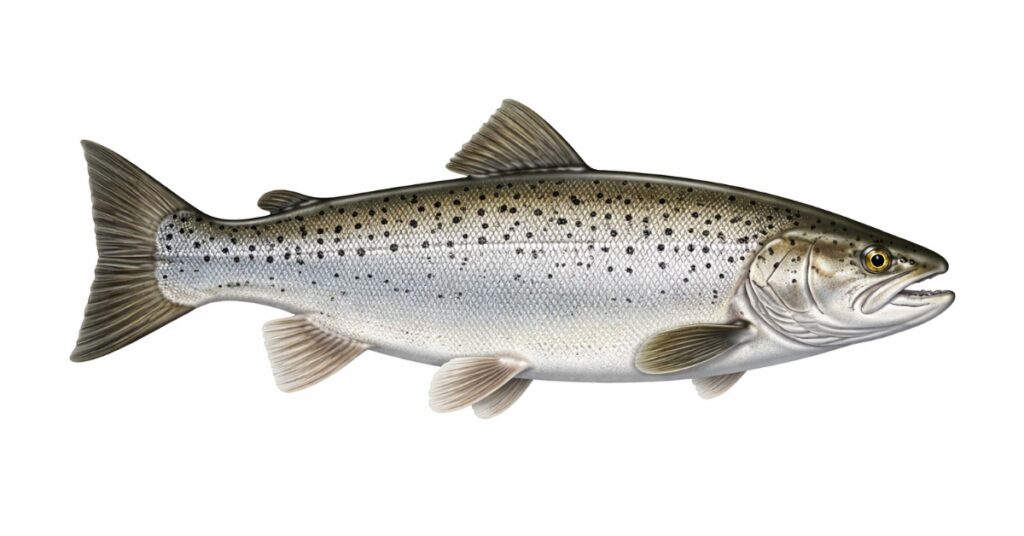
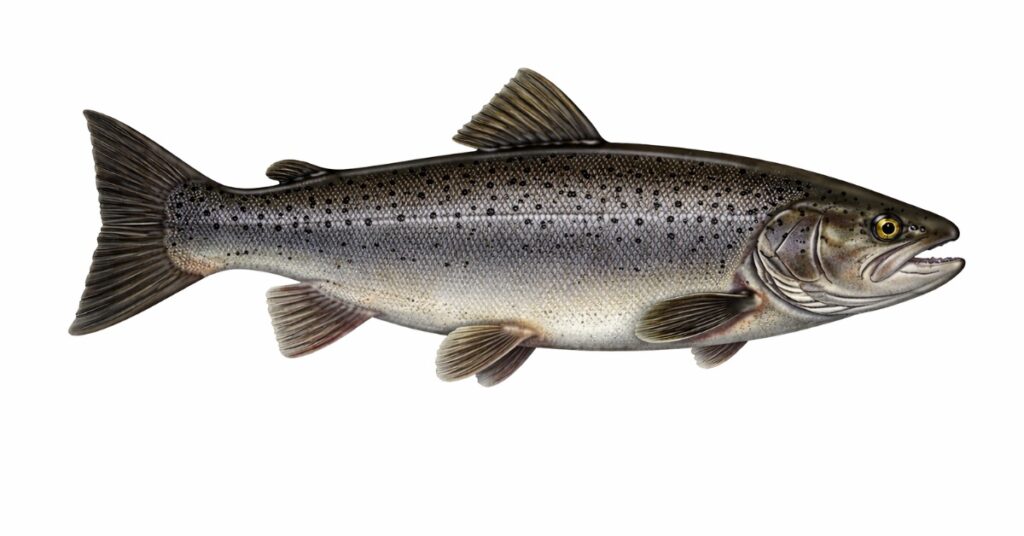
Post-spawning fish are those that have finished spawning (in most cases) and are on their way back to the sea. They have often been under considerable stress for an extended period.
Then there are non-spawning fish (silver fish), which are usually brighter and not as worn out as fish that have spawned.
Post-spawning fish are often:
- Thin and low on energy
- Showing signs of wear from their time in the river
- More sensitive to stress
Non-spawning fish are often:
- Fatter and stronger
- Brighter in appearance, though sometimes still showing signs of time in the river
- Better able to handle stress
This means that their chances of survival after release are not the same.
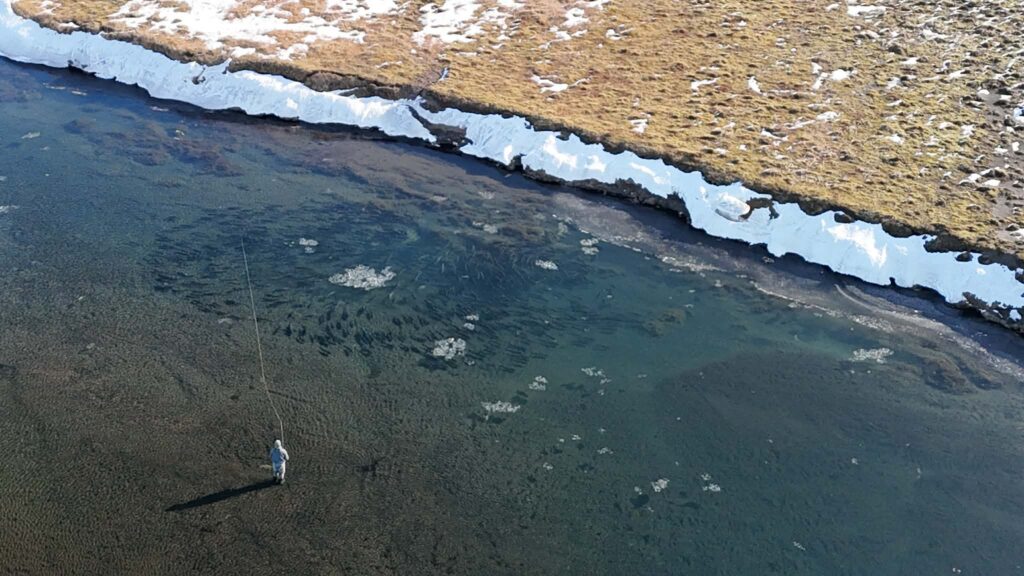
There are examples from Geirlandsá 2026 that illustrate this well.
Reality by the river
We all see this and know that care must be taken when releasing fish.
Some post-spawning fish take the fly, fight well, and swim away strongly.
Others — especially spawned-out fish — are tired, dark, and respond poorly, if at all.
Non-spawning fish, on the other hand, are usually brighter, fight harder, and respond better when released.
This leads to a very simple conclusion:
Not all fish are the same.
The most important factor in releasing fish is air exposure
One of the most critical factors affecting survival after release is how long the fish is held out of the water.
Studies show that:
- A short time out of water (<10 seconds) has little to no effect
- Around 30 seconds can reduce survival
- Longer exposure can have significant negative effects
For post-spawning fish, already in a weakened state, this impact can be even greater than for stronger fish.
Some post-spawning fish are still strong and have a good chance of surviving release.
Others are clearly at the end of their strength and have little chance.
You don’t always need research to see the difference.
It is also clear that catch & release has a positive effect on fish numbers in rivers. See the accompanying image from Geirlandsá.
Conclusion
Catch & release works.
However, it is important to remember that it does not work equally well for all fish.
A strong fish has a good chance of survival.
A weaker fish has a lower chance.
The responsibility lies with the angler in how the fish is handled.
The rule
The best fish is the one that never leaves the water.
Final words
We will never have all the answers or a final conclusion about what is right or wrong.
But one thing is certain:
How we handle the fish matters — and sometimes the best decision is simply to release it immediately, giving it the best possible chance of survival.
Sources
Skov, C. et al. (2023). Post-release effects of catch-and-release angling for sea trout (Salmo trutta).
DTU Aqua / Fisheries Research.
Thorstad, E.B. et al. (2003). Catch-and-release of Atlantic salmon and trout: survival and behaviour.
Norwegian Institute for Nature Research (NINA)