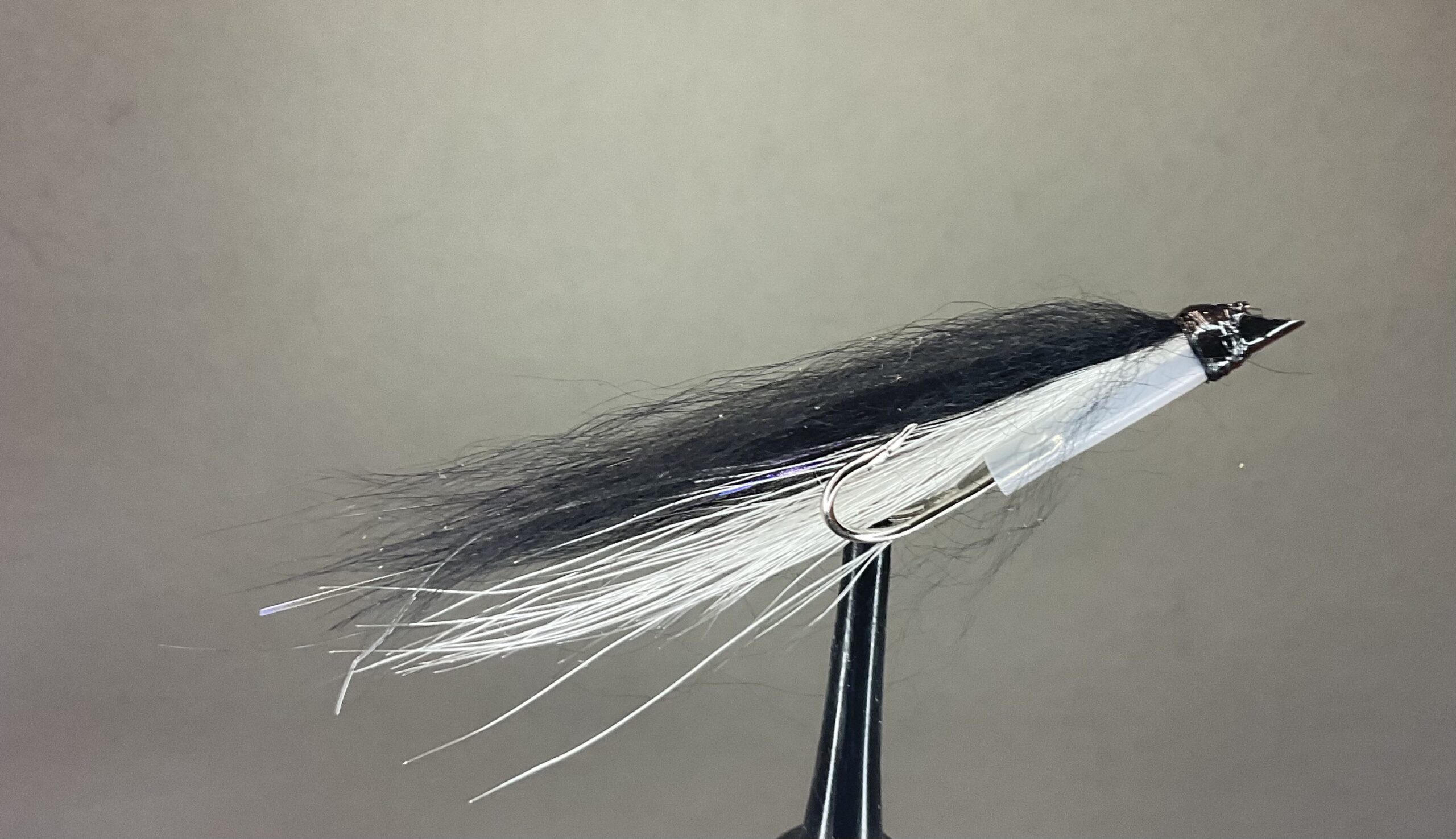
Few salmon flies have had as much influence on modern Atlantic salmon fishing as the Sunray Shadow. Over the past decades it has become one of the most effective and widely used salmon flies in the world. Numerous variations of the fly exist today, but the original idea remains the same: a simple long-winged tube fly designed to provoke aggressive takes from Atlantic salmon.
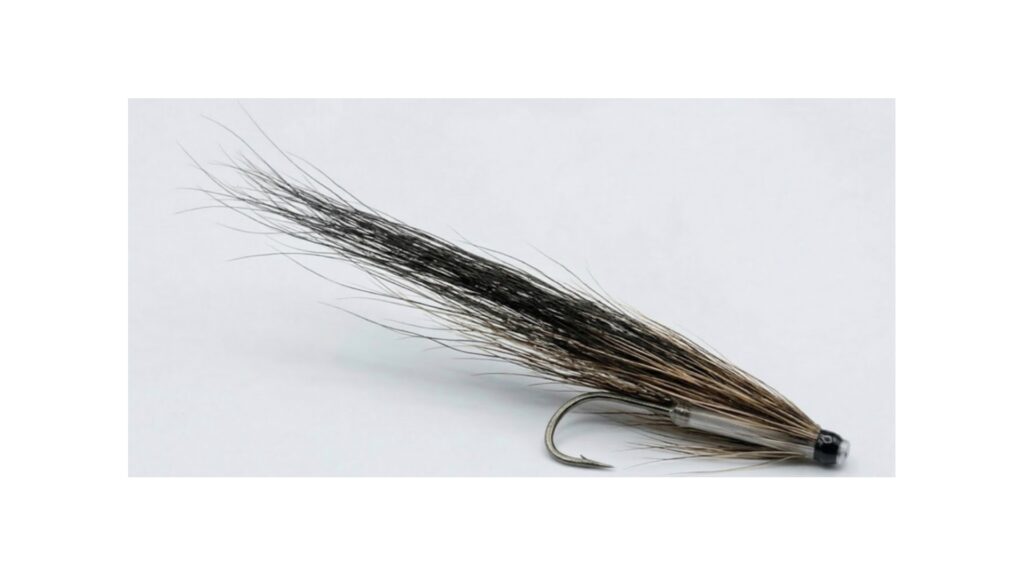
Before the Sunray Shadow appeared, another fly dominated many Scottish rivers – the Collie Dog. This pattern was tied long before the Sunray Shadow and is in many ways its predecessor. Like many successful fishing flies it was simple to tie, which may explain why it spread so widely among anglers.
Early versions of the Collie Dog were tied either on hooks or tube bodies. In some cases anglers even used tubes made from BIC ballpoint pen barrels. The wing material was often taken from the hind legs of Border Collie dogs, which were common on farms throughout Scotland. As the story goes, if a Border Collie saw scissors coming near it would quickly sit on its tail to protect its hair – a story often retold in articles about the fly.
In the early 1970s an English angler named Ray Brooks travelled to Norway in search of great Atlantic salmon fishing. After exploring several rivers he eventually found himself fishing the famous river Lærdalselva. Brooks became fascinated by the river and its surroundings, and it was here that the Sunray Shadow began to take shape.
The original fly was tied on a clear plastic tube and used natural squirrel hair for the wing, both mottled grey and brown. The pattern proved incredibly effective. Later versions were tied commercially by the Danish company Lawrock, which produced versions with a white underwing for coloured water and a darker wing for clearer conditions.
No one truly knows what Atlantic salmon see when they attack the Sunray Shadow. Some anglers believe it imitates a small eel, sand eel, or even a lamprey. Whatever the reason, the takes can be explosive and unforgettable.
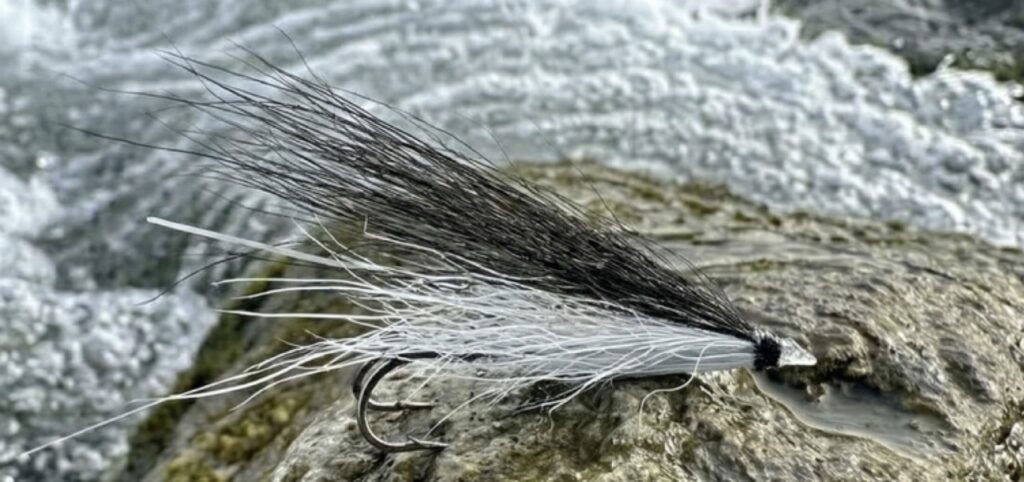
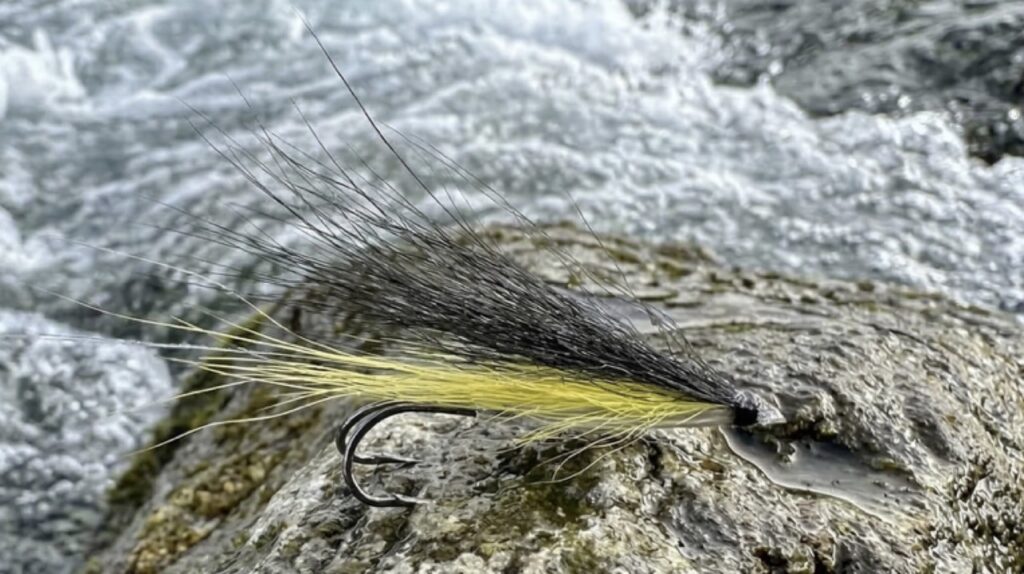
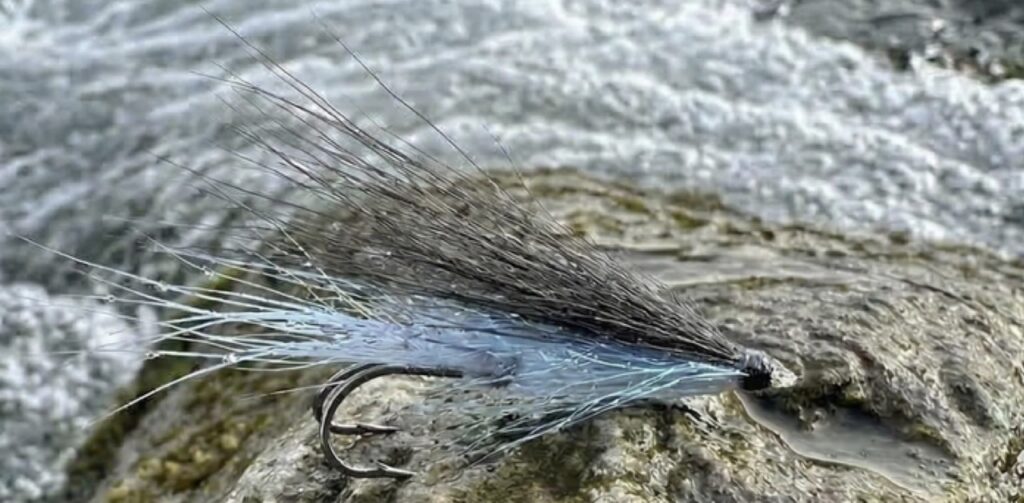
The Sunray Shadow quickly spread throughout the salmon fishing world, although it reached Iceland somewhat later. Whether that delay was due to geographical isolation or simply the slow spread of new fly patterns is hard to say.
Over time the fly has been tied in many variations. Polar bear hair was often used as an underwing material, and Norwegian tiers experimented with many colours including yellow, blue, green, orange, red and white.
Years later the Swedish angler Per Stadigh developed a variation known as the Swedish Poacher while fishing the Kharlovka river system in Russia. The name was given by local guides and the fly soon became one of the important salmon patterns used across Europe. Stadigh used UNI-stretch in red or chartreuse as a hotspot and tied the wing long and slim with strands of rainbow flashabou.
Today the Sunray Shadow remains one of the most influential salmon flies ever created and continues to produce fish in rivers across the Atlantic salmon’s range.
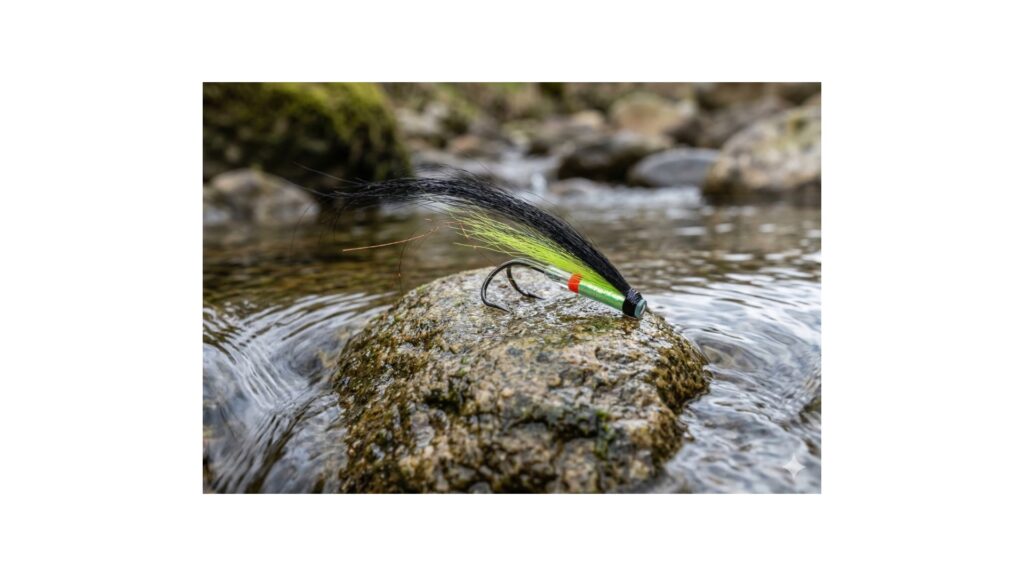
The Sunray Shadow remains one of the most effective salmon flies for Atlantic salmon fishing in Iceland, Norway and Scotland.