

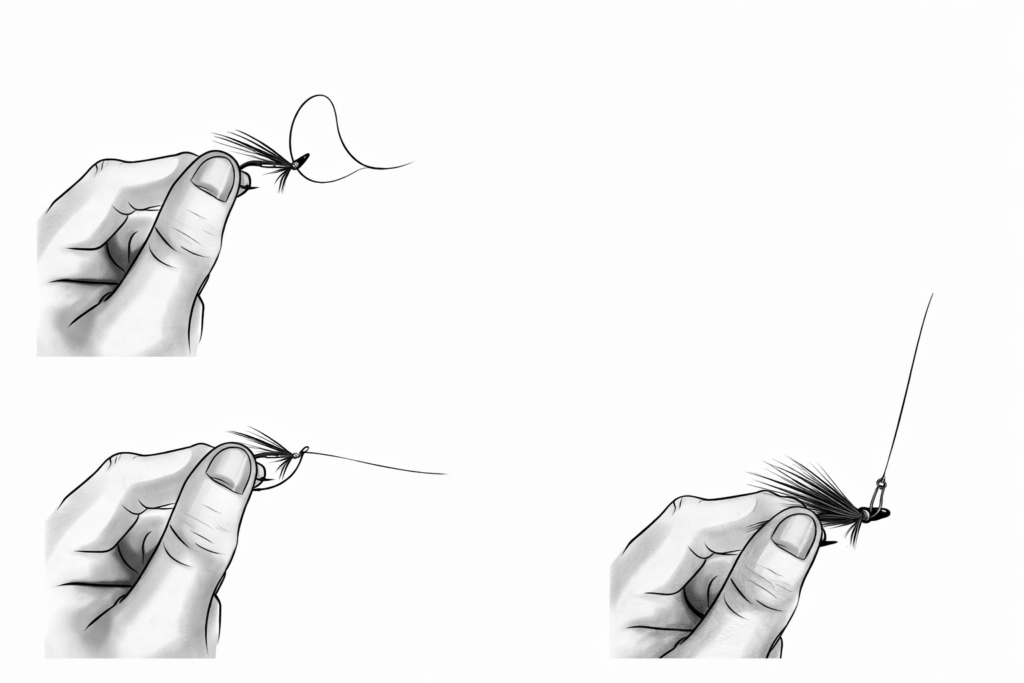
When hitching/riffling with single hooks, it is important to tie the fly to the leader so that the head of the fly faces against the current. The loop (hitch knot) is then slipped over and secured. This means the leader should be on the side facing the angler; the hook shank and the leader should form a 90-degree angle.
This ensures the fly swims correctly in the water. However, this does not mean you can move from one bank to the other without making adjustments. It matters which side you are standing on—you cannot riffle on one side and then cross over and fish the opposite bank without changing the knot setup.
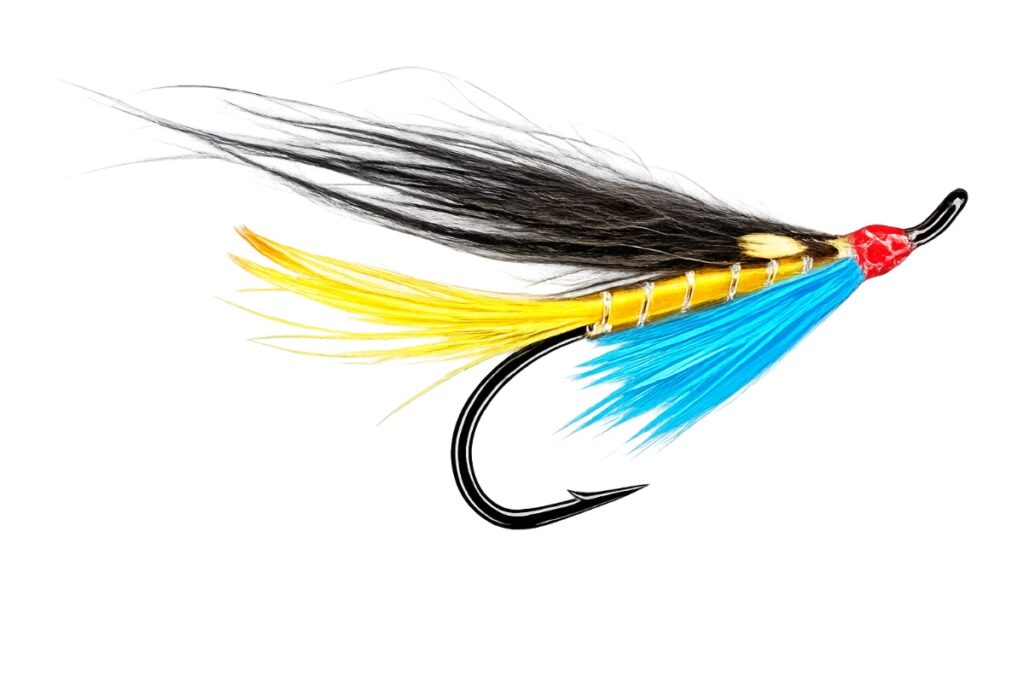
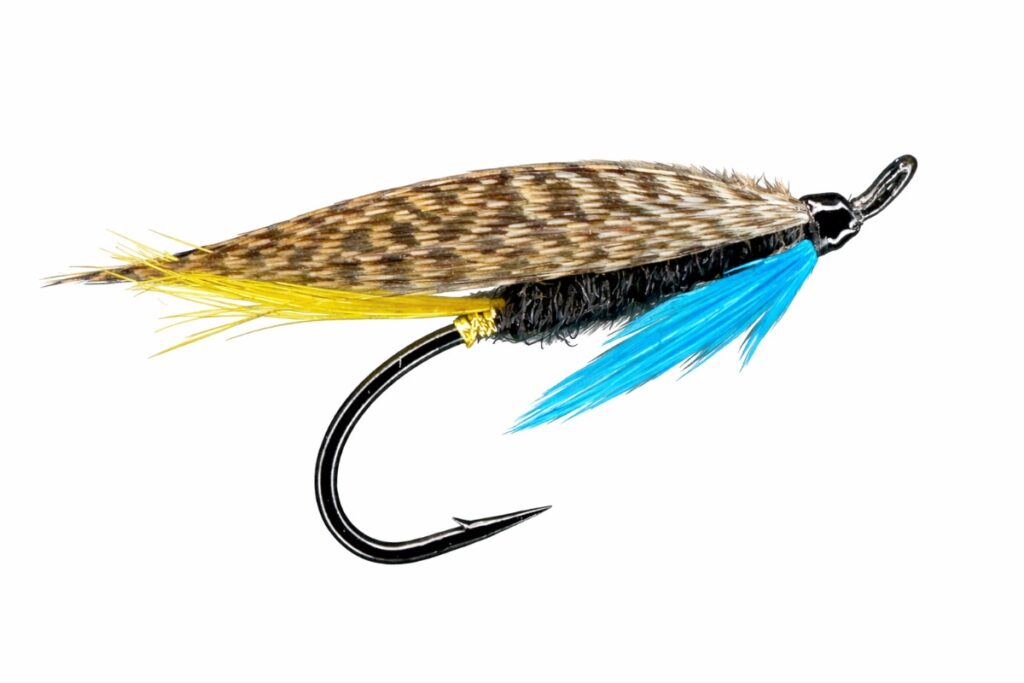
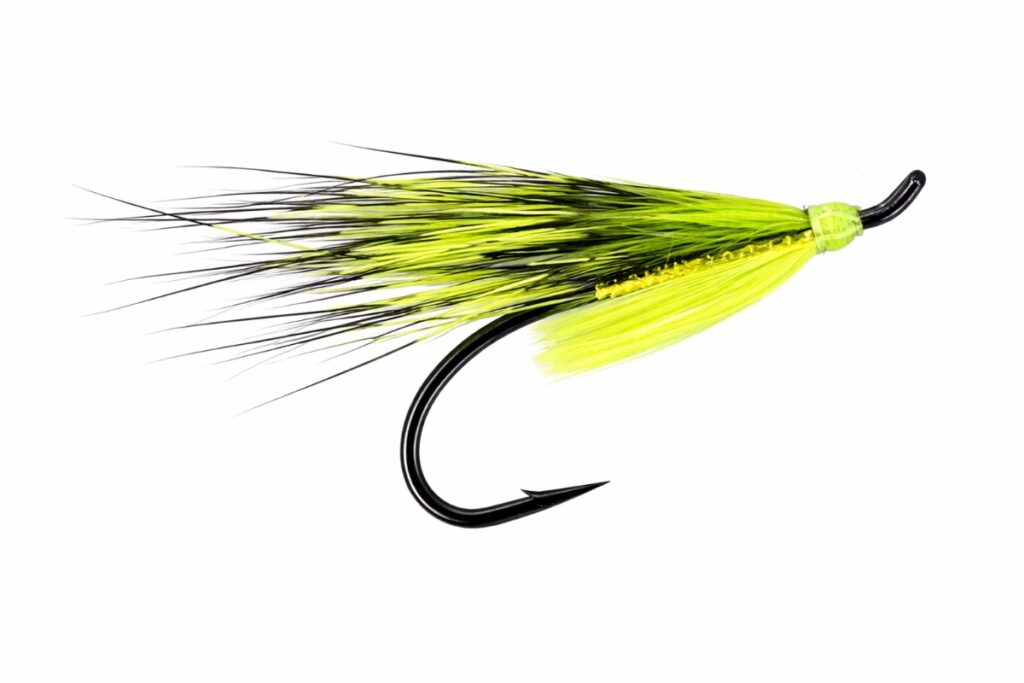
John D. Berger created some of the finest single hook riffling flies I have ever seen. He positioned the head slightly further back so that the hitch knot is placed in front of the head. This ensures the riffle is extremely subtle—almost like the track of a razor blade.
He told me that the finer the riffle, the more effective the fly becomes as a fishing tool. With that knowledge, I have used this technique for three decades with excellent results.
Single hooks in the style of John D. Berger.
I was fortunate to get to know John Berger, and I remain forever grateful for all the guidance he gave me in my younger years—especially the moment when he showed me just how powerful the riffling method can be.
The lesson took place on Breiðan, at Stekkur in the Norðurá river. John was fishing the pocket water on the far side, and as the salmon rose to the fly, he slightly lowered the rod tip so the fish would miss it. He did this six times, allowing the fish to take the fly on its seventh attempt.
This was an absolutely incredible lesson in how this method works and just how effective it can be.
Hitch knot applied to a single hook. Remember to keep the head facing the current and tighten the knot toward you.
More Tips from Haugur
Learn more – the small details matter